
C2PA: the standard behind content provenance
C2PA is the open standard that lets a photo or video carry a signed record of where it came from. Here is who built it, why it gained momentum in 2025, and why the AI Act makes it matter now.
At the end of our piece on the Kamchatka snowstorm, we said that proof has to start at the camera, and that we are building on the open C2PA standard. This article explains what that standard is, who stands behind it, and why it has become central to how Europe will regulate AI-generated content.
Two initiatives became one standards body
C2PA stands for the Coalition for Content Provenance and Authenticity. The Coalition was set up in 2021 as a project of the Joint Development Foundation, part of the Linux Foundation, to write open, global technical standards for content provenance: a verifiable record of where a piece of media came from and how it has changed.1
C2PA brought together two earlier efforts: in late 2019 Adobe launched the Content Authenticity Initiative (CAI) with The New York Times and Twitter and in 2020 the BBC, CBC/Radio-Canada, Microsoft and The New York Times launched Project Origin to tackle disinformation in news.2 CAI still exists, and its role consists in building the community that adopts C2PA’s standard.
C2PA started with six founding members: Adobe, Arm, the BBC, Intel, Microsoft and Truepic. Its steering committee now includes Adobe, Amazon, the BBC, Google, Meta, Microsoft, OpenAI, Publicis Groupe, Sony, TikTok and Truepic.3 The idea that made it work was to bring the whole market to one table: newsrooms, camera makers, platforms, AI developers, non-profits and certificate authorities, all agreeing on a single format rather than competing ones.
A signed record that travels with the file
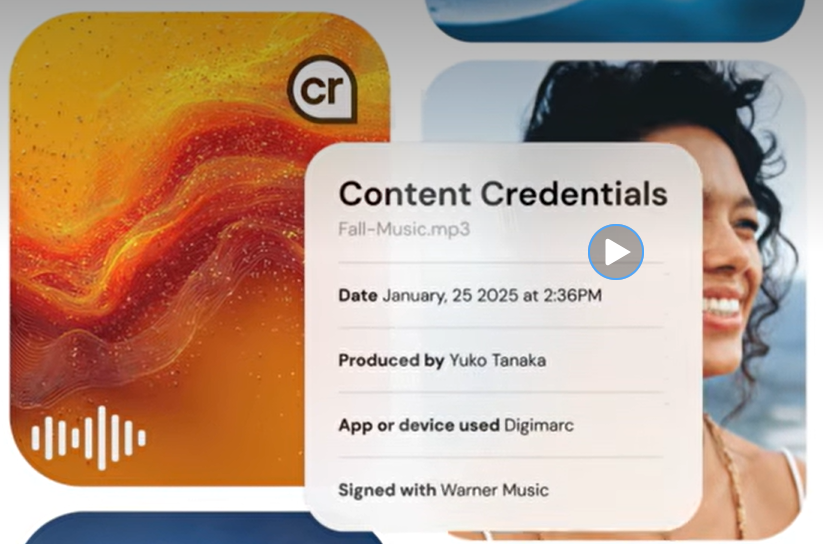
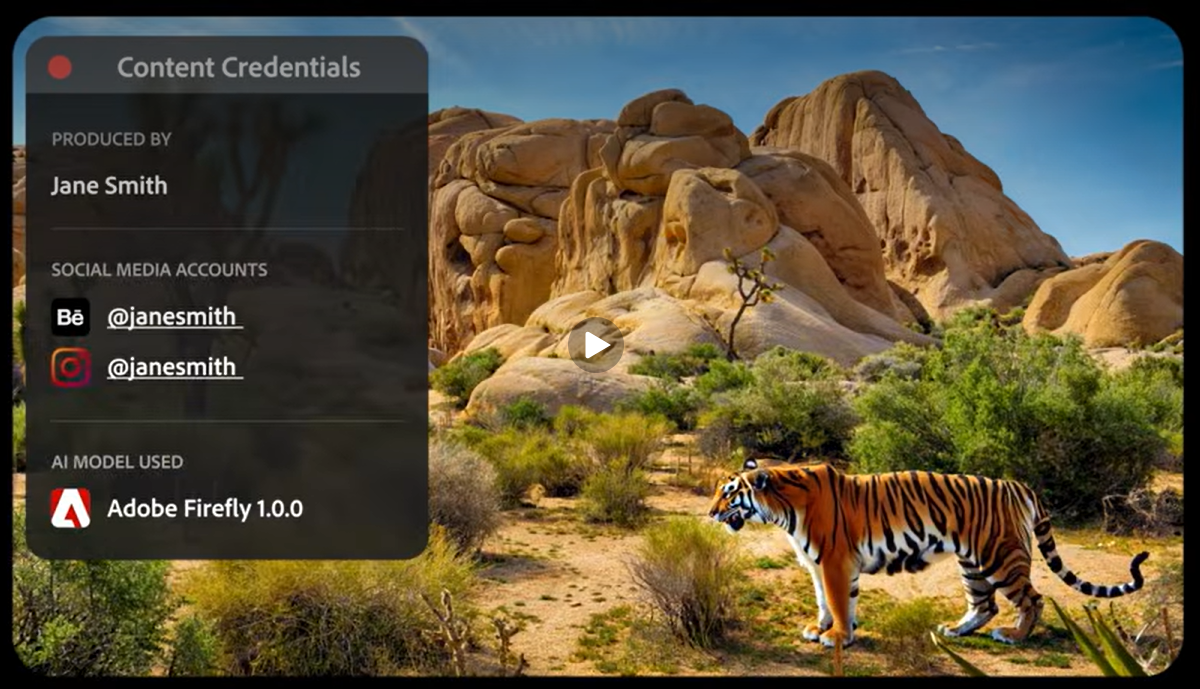
C2PA defines what is technically called Content Credentials. When a device or app creates or edits a file, it can attach a manifest: a set of statements about the file, such as which device captured it, when, and which edits followed. The manifest is bound to the content with a cryptographic hash and signed with a certificate. Anyone who receives the file can check the signature. If the pixels or the record are altered, the check fails.4
The standard does not say whether a picture is true. It says where the picture came from and who vouches for it, which is the question fact-checkers spent days answering by hand in Kamchatka.
Members write the specification together
C2PA members work in working groups and agree to license their contributions, and any patents those contributions need, on royalty-free terms. Together they gather provenance requirements, turn them into specifications, and publish best practices and reference designs. They push for the specifications to become global standards and to be adopted worldwide, above all by social and media platforms, while making sure content with provenance attached remains accessible to everyone.1
2025 was the year it moved from paper to infrastructure
Generative AI spread faster than regulators could set technical rules, and in 2025 C2PA filled part of that gap.
- January: the US National Security Agency, with the cyber security agencies of Australia, Canada and the UK, published joint guidance urging wide adoption of Content Credentials across the information ecosystem.5
- February: Cloudflare, which serves about a fifth of websites, let publishers preserve Content Credentials with one click.6
- June: C2PA soft-launched its Conformance Program at the Content Authenticity Summit at Cornell Tech. Implementations must now prove they follow the specification before they join the trusted ecosystem.7
- September: established certificate authorities joined the C2PA Trust List, among them SSL.com and DigiCert, which says it was one of the first CAs listed.8
The AI Act turns provenance into a legal requirement
From August 2026, Article 50 of the EU AI Act requires providers of generative AI to mark synthetic content in a machine-readable, detectable format. Generative AI systems already on the market before that date have until 2 December 2026 to comply.9 The Commission’s Code of Practice, published in June 2026, translates this into at least two layers of marking as the general rule: digitally signed, time-stamped metadata recorded securely, and an imperceptible watermark embedded in the content itself.10 What used to be a voluntary industry effort is now a compliance question.
Why RealityFoundation works on C2PA
Content Credentials are the most established open standard for that signed-metadata layer. The AI Act deals with the synthetic side: content that declares it was generated. We work on the other side: content captured by a real camera, signed at the moment of capture so it can prove it is real. Contributing to C2PA lets us help shape the standard our infrastructure is built to interoperate with, so that a record made on a phone in Petropavlovsk-Kamchatsky can be checked by a newsroom in Seoul with the same tools.
Sources
- C2PA, “About”. c2pa.org; C2PA, “Technology and media entities join forces to create standards group aimed at building trust in online content”, 22 February 2021. spec.c2pa.org ↩
- Adobe, “Adobe, The New York Times Company and Twitter Announce Content Authenticity Initiative to Develop Industry Standard for Content Attribution”, 4 November 2019. businesswire.com; Microsoft On the Issues, “A promising step forward on disinformation”, 22 February 2021. blogs.microsoft.com ↩
- C2PA, “Membership”, accessed October 2026. c2pa.org; C2PA, “C2PA Welcomes TikTok to Steering Committee, Advancing the Adoption of Content Credentials at a Global Scale”, 27 July 2026. c2pa.org ↩
- C2PA, “C2PA Specifications”. c2pa.org ↩
- National Security Agency, Australian Signals Directorate’s ACSC, Canadian Centre for Cyber Security and UK NCSC, “Content Credentials: Strengthening Multimedia Integrity in the Generative AI Era”, 29 January 2025. media.defense.gov ↩
- Cloudflare, “Preserving content provenance by integrating Content Credentials into Cloudflare Images”, 3 February 2025. blog.cloudflare.com; Content Authenticity Initiative, “Cloudflare becomes the first major content delivery network to implement Content Credentials”, 3 February 2025. contentauthenticity.org ↩
- Andy Parsons, “Raising the bar for trust: introducing the C2PA Conformance Program”, Content Authenticity Initiative, 9 October 2025. contentauthenticity.org; C2PA, “Conformance”. c2pa.org ↩
- SSL.com, “SSL.com Joins the C2PA Trust List as a Conformant CA”, 22 September 2025. ssl.com; DigiCert, “How C2PA and DigiCert Strengthen Digital Content Integrity”, 2025. digicert.com ↩
- Regulation (EU) 2024/1689 (Artificial Intelligence Act), Article 50. eur-lex.europa.eu; transitional period for existing systems introduced by Regulation (EU) 2026/1744 (Digital Omnibus on AI). ↩
- European Commission, “Commission publishes Code of Practice on marking and labelling AI-generated content”, 10 June 2026. digital-strategy.ec.europa.eu ↩