
RealityFoundation
Certify your media at capture — tamper-proof, blockchain-anchored, C2PA-compliant.

The Problem
Today, there is no reliable way to prove with certainty whether a photo, video, or document was AI-generated. Detection-based approaches are fundamentally reactive — they lag behind generation models that keep getting better at producing realistic, harder-to-detect synthetic content.
Journalism, legal evidence, insurance claims, and public accountability all depend on one assumption: that what we see is real. When that assumption breaks, truth becomes negotiable. Bad actors fabricate freely, and the honest lose the ability to prove they're telling the truth.
This is a closing window. Once AI-generated content becomes indistinguishable from reality, retroactive verification becomes impossible — any unverified record from the past stays permanently disputable. Trust also collapses asymmetrically: once people stop believing digital evidence, restoring that trust is extraordinarily difficult.

Viral exageration of reality
A real snowstorm hit Kamchatka in early 2026, but AI-generated images and videos exaggerated its intensity into a viral, distorted version of reality
Source: BBC News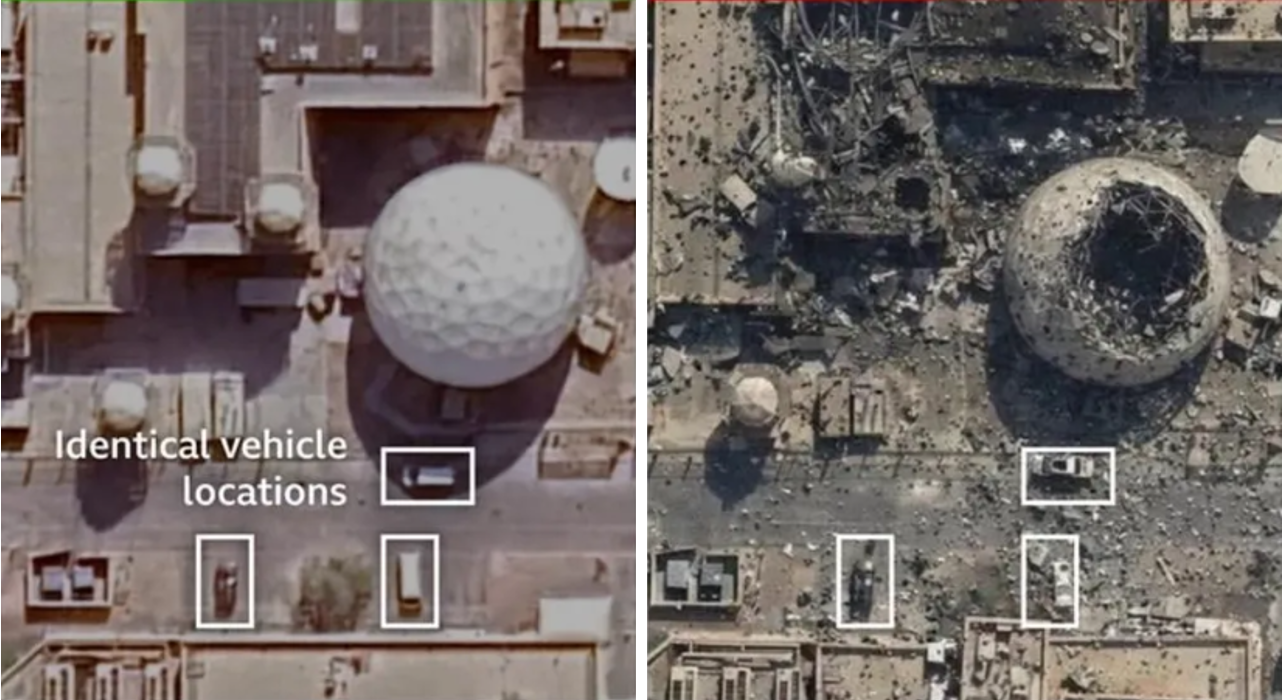
Harmful misinformation
After the outbreak of the 2026 Iran War, entirely AI-generated images and videos of airstrikes circulated online, depicting events that never actually occurred
Source: Financial TimesOur Approach
We're building the infrastructure to certify media at the moment of capture — before manipulation can occur. Raw media and its metadata (timestamp, GPS, device fingerprint) are hashed instantly. That hash is signed and anchored to a public blockchain, producing a permanent, tamper-proof certificate of authenticity. The result is natively compatible with C2PA, the open content-provenance standard backed by Adobe, Google, Microsoft, OpenAI, and Amazon.
How it works
A high-level look at the certification process. An interactive demo is coming with our MVP.
Step 01
Raw media and its metadata — timestamp, GPS, device fingerprint — are collected the instant the shutter clicks.
Step 02
A cryptographic hash of the capture is generated instantly — unique to that exact file and its metadata.
Step 03
The hash is signed and written to a public blockchain, with the underlying content stored on IPFS.
Step 04
The result is a permanent, tamper-proof certificate of authenticity — natively compatible with C2PA.
The EU AI Act, the Digital Services Act, and the forthcoming Media Authenticity Regulation are creating binding obligations around synthetic media transparency. RealityFoundation is positioned to provide the independent academic grounding these frameworks require — from methodology to evidence standards.
Requires watermarking of AI-generated content. Our research informs verification methodology.
Discover more →
Mandates risk assessments for synthetic media on platforms. We provide independent benchmarks.
Discover more →
We study interoperability between blockchain records and emerging open standards like C2PA and IPTC.
Discover more →
Standards & Partnerships
RealityFoundation is a contributing member of the Coalition for Content Provenance and Authenticity (C2PA) — the open technical standard behind Content Credentials, developed alongside Adobe, Amazon, BBC, Google, Microsoft, and OpenAI. Our capture-to-certificate pipeline is built to be natively interoperable with the C2PA specification.
Learn about C2PA →Get Involved
RealityFoundation collaborates with the people and institutions shaping how media authenticity gets built, regulated, and reported on.
Propose a joint study, contribute to open datasets, or co-author research on provenance and detection methods.
Propose a collaboration →Request a technical briefing on capture-time provenance, C2PA compatibility, or how certification intersects with the AI Act, eIDAS, and the DSA.
Request a briefing →Pitch an investigation, request a technical source, or talk to us about verifying field documentation.
Get in touch →